
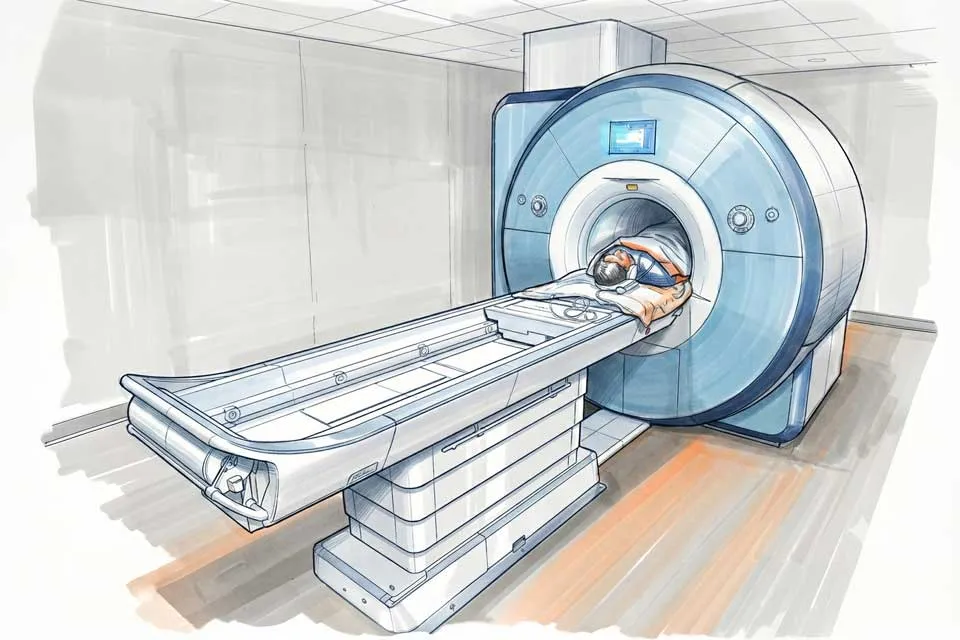
Cardiac MRI: Complete Guide to Heart Magnetic Resonance Imaging
Echocardiography remains the workhorse of cardiac imaging, but it shows only what sound waves can reveal through the chest wall. Cardiac CT angiography depicts coronary anatomy with exquisite detail, but it cannot peer inside the heart muscle itself. Cardiac MRI fills a critical gap by providing tissue-level information no other noninvasive test can deliver. It distinguishes scar from viable muscle, detects inflammation invisible to other modalities, and identifies infiltrative diseases that mimic more common conditions.
This matters because the cause of heart dysfunction determines its treatment. A heart weakened by coronary blockages may recover with revascularization. One damaged by viral inflammation requires different management than one infiltrated by amyloid proteins. Cardiac MRI makes these distinctions with remarkable precision, often eliminating the need for invasive biopsy. For patients with unexplained cardiomyopathy, arrhythmias, or suspected myocarditis, cardiac MRI provides diagnostic clarity unavailable elsewhere.
Yet despite strong evidence supporting its use, cardiac MRI remains underutilized in many settings. The technology requires specialized expertise, equipment, and time. Economic constraints, training limitations, and referral patterns all influence whether patients receive this test when appropriate. The articles below provide everything you need to understand cardiac MRI, evaluate whether it might benefit you, and navigate the healthcare system to access it.
Cardiac MRI Articles
Understanding Cardiac MRI
- What Is Cardiac MRI and How Does It Work? Learn what cardiac MRI is, how it creates images, what late gadolinium enhancement and parametric mapping reveal, and what to expect during the examination.
- Cardiac MRI Technology, Equipment, and Image Quality. Understand the differences between scanner types, what affects image quality, measurement reproducibility, and how to assess facility quality.
- Understanding Cardiac MRI Results and What They Mean. Learn how to interpret cardiac MRI reports, what normal values look like, what scar patterns indicate, and how cardiologists integrate findings into diagnosis.
Clinical Evidence and Comparisons
- Cardiac MRI vs Other Heart Imaging Tests. Compare cardiac MRI to echocardiography, CT angiography, and nuclear stress testing. Understand when each test adds unique value.
- When Is Cardiac MRI Indicated? Learn the established indications for cardiac MRI, which conditions make it the gold standard, and what guidelines recommend.
Clinical Decision-Making
- How Cardiac MRI Findings Change Treatment Decisions. Understand how specific findings translate into management changes, from medical therapy intensification to device implantation decisions.
- Serial Cardiac MRI and Monitoring Over Time. Learn when repeat imaging is appropriate, what changes are meaningful versus measurement noise, and how monitoring informs treatment.
Safety and Practical Considerations
- Cardiac MRI Safety, Contraindications, and Risks. Understand gadolinium safety, device compatibility, and who should not undergo cardiac MRI.
- Cardiac MRI Costs, Insurance, and Access. Navigate the financial aspects of cardiac MRI, from typical costs to insurance coverage and prior authorization requirements.
Patient Advocacy
- How to Advocate for Cardiac MRI as a Patient. Get practical guidance on requesting cardiac MRI, finding experienced facilities, and navigating conversations with your cardiologist.
Special Considerations
- Cardiac MRI and Comprehensive Cardiac Assessment. Understand how cardiac MRI fits into broader cardiovascular evaluation alongside other tests, biomarkers, and genetic information.
- Cardiac MRI in Special Populations. Learn how cardiac MRI evaluation differs for athletes, patients with arrhythmias, kidney disease, and other special circumstances.
History and Future
- The History and Evolution of Cardiac MRI. Trace the development of cardiac MRI from early experiments to clinical standard, including landmark studies and technological breakthroughs.
- The Future of Cardiac MRI: Emerging Technology and Research. Explore emerging technologies including AI interpretation, faster imaging, contrast-free techniques, and what research gaps remain.