
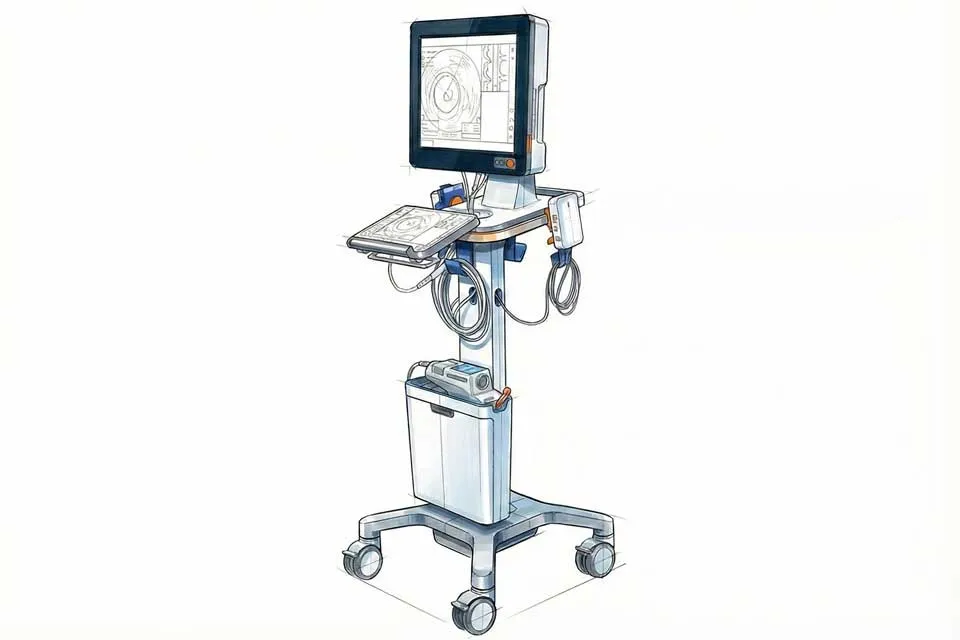
Intravascular Ultrasound (IVUS) for Heart Disease
Coronary angiography has been the gold standard for visualizing coronary arteries for decades. But angiograms show only the silhouette of the arterial lumen. They miss the vessel wall entirely. Intravascular ultrasound changes this equation by imaging the artery from the inside out, revealing plaque burden, composition, and vessel remodeling that angiography cannot detect.
IVUS matters because what angiography calls a “40% blockage” may actually represent far more extensive disease. Arteries compensate for plaque buildup through outward expansion, a process called positive remodeling that preserves lumen size while hiding substantial atherosclerosis. IVUS exposes this hidden disease. During stent placement, IVUS guides proper sizing and confirms adequate expansion, reducing the risk of complications like stent thrombosis and restenosis.
Yet despite strong evidence supporting its use, IVUS remains underutilized in American cardiac catheterization labs. Economic factors, time constraints, and training limitations all contribute. Patients rarely know to ask for it. The articles below provide everything you need to understand this technology, evaluate whether it might benefit you, and navigate the healthcare system to access it.
IVUS Articles
Understanding IVUS
- What Is IVUS and How Does It Work? Learn what intravascular ultrasound is, how it creates images from inside coronary arteries, and what information it provides that angiography cannot.
- IVUS vs Other Coronary Imaging. Compare IVUS to angiography, OCT, CT angiography, and FFR. Understand when each technology adds value and how they complement each other.
Clinical Evidence
- The Evidence Base for IVUS-Guided Intervention. Review the major trials supporting IVUS guidance, from ADAPT-DES to ULTIMATE. Understand what the data show about outcomes and where gaps remain.
- When Is IVUS Clinically Indicated? Learn when IVUS is standard of care, what guidelines recommend, and how cardiologists decide whether to use it for specific patients and lesions.
IVUS in Practice
- IVUS for Stent Optimization and PCI Guidance. Understand how IVUS improves stent selection, deployment, and optimization. Learn the criteria that define adequate stent expansion and apposition.
- IVUS for Plaque Characterization. Explore how IVUS assesses plaque burden and composition, identifies vulnerable plaque features, and predicts clinical outcomes.
- IVUS for Tracking Plaque Progression and Regression. Discover how serial IVUS studies measure plaque changes over time and inform treatment decisions about therapy intensity.
Risks and Limitations
- Risks, Limitations, and Contraindications of IVUS. Understand the procedural risks, imaging limitations, and situations where IVUS may not be appropriate.
Economics and Access
- IVUS Costs, Insurance, and Reimbursement. Navigate the financial aspects of IVUS, from procedural costs to insurance coverage and how economic incentives shape utilization.
- Why Isn’t IVUS Used More Often? Examine the barriers preventing broader IVUS adoption and what would need to change for it to become standard of care.
Patient Advocacy
- How to Advocate for IVUS as a Patient. Get practical guidance on requesting IVUS, finding experienced operators, and navigating conversations with your cardiologist.
- IVUS and the Decision Between Medical Therapy, PCI, and CABG. Learn how IVUS findings inform revascularization decisions and shared decision-making with your care team.
Future Directions
- The Future of IVUS Technology. Explore emerging technologies including AI-assisted interpretation, hybrid imaging catheters, and what advances may expand IVUS applications.